
How Transponder Key Replacement Actually Works
A transponder key has two functional parts: the mechanical blade that physically turns the ignition cylinder, and the transponder chip embedded in the plastic head. When you insert the key and turn it, a radio-frequency antenna ring around the ignition reads the chip's unique identifier. If that code does not match what is stored in the vehicle's engine control unit, the immobilizer stays active and the engine will not crank — even if the blade is cut perfectly. This is why a hardware-store key copy that looks identical to your original may cut your ignition but still leave you stranded.
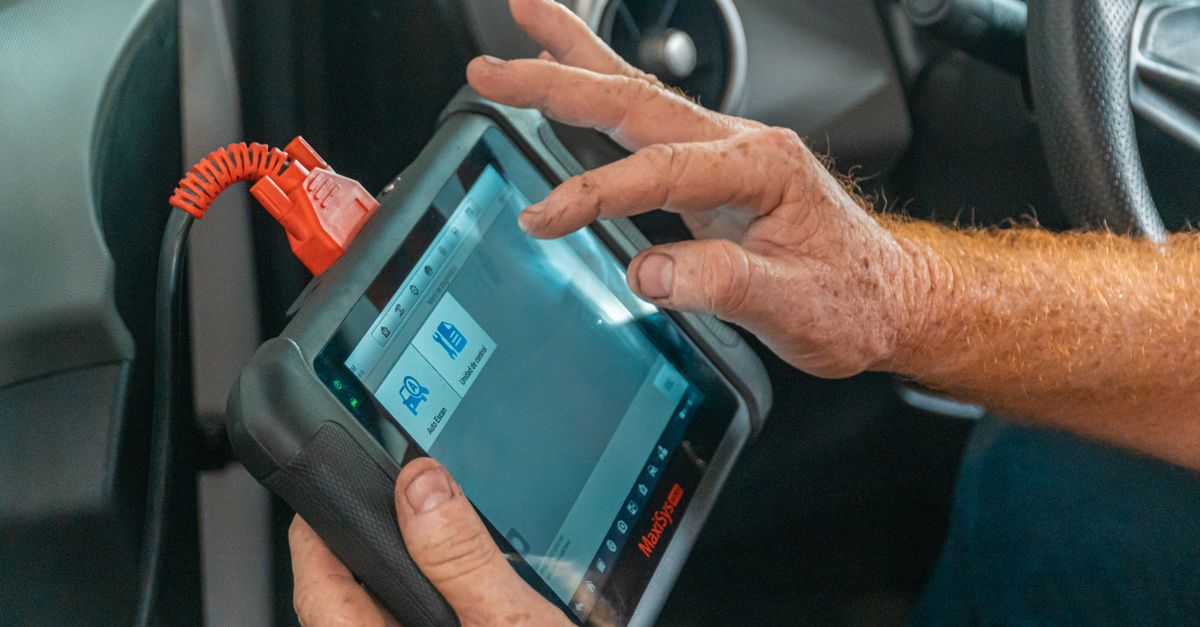
Our technicians address both layers at once. Using OBD-II diagnostic tools and manufacturer-specific programming software, we read the immobilizer's stored key data, generate a compatible transponder chip signal, and write the new key into the system. The blade is cut on our mobile key machine to match your lock cylinder's depth-and-space code, which we pull either from your Vehicle Identification Number or from a direct measurement of the cylinder itself. The result is a fully functional replacement that starts your car the first time, every time, with no damage to the ignition or the vehicle's electronics.